Singapore's 733 square kilometres contain an unexpectedly high concentration of productive birding habitat. The island sits directly on the East Asian-Australasian Flyway, one of the planet's busiest migratory routes, and its nature reserves, wetlands, and urban parks collectively support more than 400 recorded bird species.
The locations below are listed with practical details: what species to expect, the best time of year to visit, and how to reach each site.
Sungei Buloh Wetland Reserve

Sungei Buloh holds ASEAN Heritage Park status and has recorded more than 200 bird species. The reserve's tidal mudflats and mangrove habitat support both resident waterbirds and migratory waders that arrive between August and April each year.
Resident species visible year-round include the White-bellied Sea Eagle (the largest raptor in Singapore, with a 2-metre wingspan), Collared Kingfisher, Grey Heron, Black-crowned Night Heron, and Brahminy Kite. The Pink-necked Green Pigeon, a species that appears on the Nature Society Singapore logo, is also regularly seen here.
During migratory season, the Migratory Bird Trail around the Buloh Tidal Ponds is the most reliable spot for shorebirds. Common Redshanks, Whimbrels, Pacific Golden Plovers, Lesser Sand Plovers, and Common Greenshanks all use these mudflats as a refuelling stop. The Broad-billed Sandpiper and Black-headed Gull appear less frequently but are recorded most years.
Access: Kranji MRT, then bus 925. Open daily 7:00 AM to 7:00 PM. Free admission. The reserve has raised boardwalks and several bird hides with viewing slits.
Best timing: September to March for migrants. Early morning (7:00 to 9:00 AM) at low tide produces the most wader activity on the mudflats.
Bukit Timah Nature Reserve
At 163 metres, Bukit Timah is Singapore's highest point and one of the few remaining patches of primary tropical rainforest on the island. The dense canopy and relatively undisturbed habitat here support forest specialists that are difficult to find elsewhere.
The Greater Racket-tailed Drongo is the signature species. It is an intelligent bird with long tail streamers ending in racket-shaped tips, and it frequently mimics the calls of other species. It often follows Long-tailed Macaque troops through the forest to catch insects disturbed by the monkeys' movement.
Other regular species include the Asian Fairy Bluebird (identifiable by its vivid blue upperparts and a distinctive two-note "glue-it" call), the Red-crowned Barbet (largely restricted to Bukit Timah and the Central Catchment area), Banded Woodpecker, and various cuckoo species.
Access: Beauty World MRT. The summit trail is about 1.5 km. A reservation is required for peak hours via the NParks website.
Best timing: Year-round for residents. Breeding displays are most visible between March and May. Early mornings on weekdays have fewer visitors.
Kranji Marshes

Adjacent to Kranji Reservoir, this 56.8-hectare freshwater marsh supports over 170 bird species. It functions as an important complement to Sungei Buloh by providing different wetland habitat types, particularly for marsh-dwelling species.
The Raptor Tower, a multi-storey observation structure, is the best vantage point during the November-to-March raptor migration. Black Bazas, Japanese Sparrowhawks, and occasionally Changeable Hawk-Eagles can be seen from the top level. Neo Tiew Woods, on the western edge of the marshes, holds forest species including the White-bellied Sea Eagle.
The bird hides at the Marsh Station are positioned for viewing shy species such as the Common Moorhen and White-breasted Waterhen. Purple Herons, Yellow Bitterns, and Black-winged Stilts are recorded throughout the year.
Access: Kranji MRT, then bus 925. Open 7:00 AM to 7:00 PM daily. Free admission.
Best timing: November to March for raptors. Dusk visits can be productive for herons and bitterns.
Central Catchment Nature Reserve and MacRitchie Reservoir
The Central Catchment covers 2,889 hectares and is Singapore's largest nature reserve. The TreeTop Walk, a 250-metre freestanding suspension bridge at canopy level, provides an unusual vantage point for observing canopy-dwelling species that are typically only heard from the ground.
The Orange-bellied Flowerpecker, Common Flameback, and various malkoha species are regularly spotted along the reservoir trails. The White-bellied Sea Eagle and Oriental Pied Hornbill are also visible from the TreeTop Walk area.
Access: Caldecott MRT, then a 20-minute walk to MacRitchie Reservoir. The TreeTop Walk requires a separate approach via the Venus Drive entrance.
Best timing: Year-round. The bridge opens at 9:00 AM on weekdays and is closed on Mondays.
Pulau Ubin and Chek Jawa Wetlands
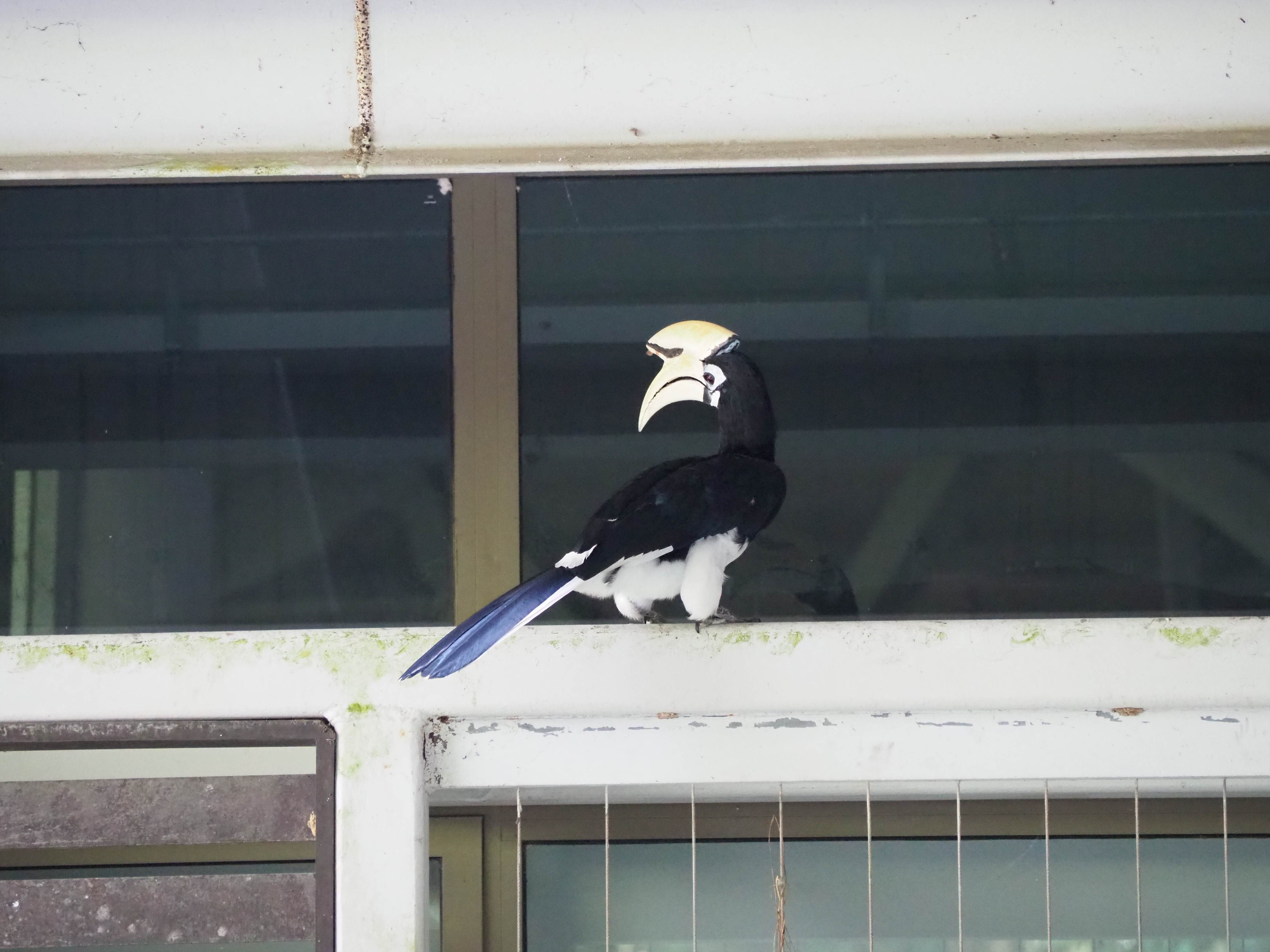
Pulau Ubin, a 10.2-square-kilometre island accessible by bumboat from Changi Point Ferry Terminal, retains a rural character that has largely disappeared from mainland Singapore. The Oriental Pied Hornbill is the island's most recognisable species; groups of these large black-and-white birds frequently fly across trails and roads.
Chek Jawa, at the eastern tip of the island, combines mangrove, coastal, and rocky shore habitats. The boardwalk system and viewing tower allow observation of both forest and shore species without entering the sensitive areas directly. Straw-headed Bulbuls, an increasingly rare species regionally, have been recorded here.
Access: Bumboat from Changi Point Ferry Terminal (S$4 per person each way). No advance booking needed; boats depart when 12 passengers are ready.
Best timing: Year-round, with peak migratory activity from September to March. Weekdays are significantly quieter.
Gardens by the Bay
An urban birding option in the city centre. The Kingfisher Wetlands and surrounding marshes at the southern end of the gardens attract a surprising number of species. Stork-billed Kingfishers, Yellow Bitterns, Cinnamon Bitterns, and Asian Koels are all regularly reported.
The gardens also support a visible population of Crimson Sunbirds, which feed on nectar in the heliconia plantings and around the Supertree structures.
Access: Bayfront MRT. The outdoor gardens are free and open 5:00 AM to 2:00 AM daily.
Best timing: Early morning before visitor numbers increase.
Pasir Ris Park
The mangrove boardwalk at Pasir Ris Park, accessed past Carpark D, is one of the more reliable sites for the Buffy Fish Owl, a nocturnal species that roosts in mangrove trees during the day. Kingfisher species are also regularly present along the boardwalk.
The park's coastal location means it can produce unexpected species during migration periods, particularly along the foreshore and around the ponds near the mangrove area.
Access: Pasir Ris MRT, then a 10-minute walk. Open 24 hours.
Best timing: Late afternoon for owls (they sometimes become active before dark). Migration months for shorebirds.
Practical Notes for Visiting Birders
- Singapore's tropical climate means heat and humidity year-round. Lightweight, breathable clothing and water are necessary regardless of the season.
- Mosquito repellent is strongly recommended at all forested and wetland sites.
- Most nature reserves do not permit flash photography. Tripod use may require a permit in some areas.
- The eBird Singapore portal maintains real-time species checklists and hotspot data contributed by local birders.
- Guided walks are organised periodically by NParks and the Nature Society Singapore at several of the sites listed above.